
 Sadhya
 Welcome to Portugal — a country where every cobblestone street, every golden coastline, and every hidden village tells a story. From fairy-tale castles perched on misty hills to rugged cliffs that tumble into turquoise seas, Portugal feels like a place where time slows down just enough for you to savor it.
But here’s the challenge: Portugal is overflowing with beauty. With so many cities, islands, and breathtaking landscapes, how do you choose where to begin? Should you sip port wine in Porto, wander the tiled streets of Lisbon, or escape to the wild beauty of the Azores?
That’s exactly why we’re here. In this article, we’ll guide you through Portugal’s most unforgettable destinations — from iconic landmarks to secret gems you won’t want to miss. By the end, you’ll know exactly where to start your own adventure.
Portugal is one of the oldest countries in Europe, with borders that haven’t changed since the 12th century. It’s also home to the world’s oldest operating bookstore in Lisbon — and, of course, the birthplace of the irresistible pastel de nata custard tart.
Lisbon
Capital, culture, nightlife, historic neighborhoods.
From the north, we travel south to Portugal’s dazzling capital — Lisbon. A city that dances between the past and the present, Lisbon is where tradition meets modern flair.
Start your journey in the Alfama district, the oldest neighborhood in Lisbon. Here, laundry sways above narrow alleyways, the sound of church bells echoes through the streets, and the soulful notes of fado music spill out of tiny taverns at night.
No visit is complete without seeing the Belém Tower, standing proudly on the riverbank since the 16th century. This fortress once guarded explorers as they set sail into the unknown. Today, it’s a symbol of Portugal’s adventurous spirit.
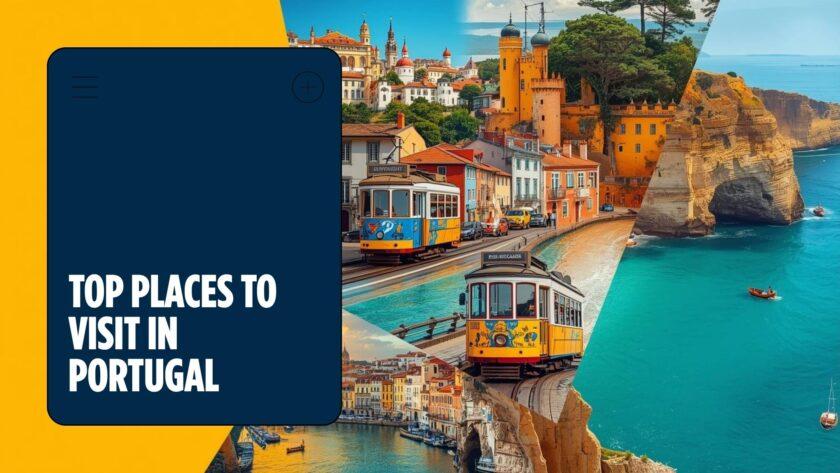
And of course, there’s the famous Tram 28. Climb aboard this yellow vintage tram as it rattles through Lisbon’s hills, past palaces, plazas, and tiled façades that shimmer in the sunlight.
But Lisbon isn’t just about history. By night, the city comes alive with rooftop bars, buzzing night markets, and irresistible flavors. Don’t leave without tasting a pastel de nata — the creamy custard tart dusted with cinnamon that locals have perfected over centuries.
Lisbon is a city of contrasts: ancient yet trendy, relaxed yet vibrant. And it’s guaranteed to steal your heart.
Sintra
Fairy-tale palaces and gardens, day trip from Lisbon.
Just a short train ride from Lisbon lies a place that feels like it was lifted straight from the pages of a fairytale — Sintra. Nestled in the rolling hills of the Sintra Mountains, this magical town is filled with castles, palaces, and gardens that seem almost too enchanting to be real.
The crown jewel is the Pena Palace. With its bold red and yellow towers rising above the mist, it looks like a dream made of stone and color. Walk its terraces and you’ll feel like royalty gazing over forests and distant ocean views.
But Sintra holds more secrets. The mysterious Quinta da Regaleira is a wonderland of Gothic architecture, hidden tunnels, and the famous Initiation Well, a spiraling staircase that descends deep into the earth like something from a legend.
Every corner of Sintra is steeped in magic — from romantic gardens to medieval castles. It’s no wonder poets and kings once called this place home.
Sintra isn’t just a destination — it’s an escape into a world where imagination and history meet.
Porto
Riverside charm, port wine, historic city.
Our journey begins in the north, in the city of Porto — a place that feels like it was painted onto the banks of the Douro River. Famous for its port wine and vibrant riverside charm, Porto is a blend of old-world beauty and youthful energy.
The heart of the city lies in the Ribeira district, where narrow cobblestone lanes wind past colorful houses that seem to cling to the river’s edge. From here, you’ll spot the iconic Dom Luís I Bridge, an iron masterpiece designed by a student of Gustave Eiffel. Walk across it, and you’ll be rewarded with some of the best views in Portugal.
But Porto isn’t just about sightseeing — it’s about tasting. The city is the birthplace of port wine, and the cellars in Vila Nova de Gaia invite you in for tours and tastings that will make you fall in love with this sweet, fortified drink.
And if you want to see the city from a different perspective, hop on a river cruise along the Douro. As you drift past terraced vineyards and historic mansions, you’ll understand why Porto has enchanted travelers for centuries.
Porto is a city of charm, flavor, and unforgettable sunsets — the perfect gateway to discovering Portugal.
Douro Valley
Wine region, river cruises, scenic landscapes.
From Coimbra, we follow the river into one of Portugal’s most breathtaking landscapes — the Douro Valley. This is wine country at its finest, where rolling hills are carved into terraces of green vineyards that seem to stretch endlessly toward the horizon.
The Douro is not just beautiful — it’s historic. This valley is the world’s oldest demarcated wine region, and for centuries, it has produced the grapes that give life to Portugal’s famous port wine.
One of the best ways to experience it is by taking a river cruise. As your boat glides past terraced slopes and sleepy villages, you’ll feel like you’ve stepped into a painting. For a different view, hop on a scenic train ride that winds along the valley, offering unforgettable glimpses of the river below.
Stop by a family-run quinta — a vineyard estate — and you’ll be welcomed with warmth, tradition, and a glass of wine that tastes like the land itself.
The Douro Valley is where nature and culture meet in perfect harmony — a journey that delights the senses and captures the heart.
Algarve
Beaches, cliffs, coastal towns (depends on beach/adventure focus).
Head south, and you’ll find Portugal’s sun-soaked treasure — the Algarve. Known for its golden beaches, dramatic cliffs, and charming seaside towns, this region is a paradise for both relaxation and adventure.
The coastline is its greatest masterpiece. In Lagos, towering cliffs frame hidden coves where turquoise waters sparkle beneath the sun. The famous Benagil Cave, with its natural skylight, feels like a cathedral carved by the sea itself.
For those who love the thrill of the ocean, the Algarve is a playground. Surfing in Sagres, sailing along the coast, or kayaking through sea caves — every day is a new adventure waiting to be lived.
But it’s not just about the beaches. Towns like Albufeira come alive at night, with bustling streets, music, and fresh seafood grilling in the open air. And inland, you’ll find rolling hills, orange groves, and peaceful villages that reveal a quieter side of the Algarve.
Whether you’re chasing sunsets over the Atlantic or simply unwinding with your toes in the sand, the Algarve is Portugal at its most dazzling.
Madeira
Island paradise, hiking, natural beauty.
Far out in the Atlantic lies Madeira, an island paradise known as the “floating garden of Portugal.” Blessed with spring-like weather all year round, Madeira is a place where nature steals the spotlight.
Its landscapes are breathtaking — from towering cliffs that plunge into the ocean to lush valleys carpeted in flowers. The island’s famous levadas — narrow irrigation channels — have become scenic walking trails, guiding hikers through forests, waterfalls, and hidden viewpoints. Each step feels like a journey deeper into paradise.
In the capital city, Funchal, you’ll find colorful markets bursting with exotic fruits, fragrant flowers, and the sound of locals sharing stories. And don’t miss the island’s botanical gardens, where vibrant blooms mirror Madeira’s nickname as a true garden island.
For a thrill, try the traditional Monte toboggan ride, where wicker sleds glide down steep streets — a tradition that’s as fun as it is unique.
Madeira is not just an island — it’s a blend of adventure, relaxation, and pure natural wonder, waiting to enchant anyone who steps ashore.
Azores
Volcanic islands, lakes, whale watching, remote nature.
Even further into the Atlantic, scattered like emeralds in the ocean, are the Azores. This volcanic archipelago feels like a secret world, untouched and wild, where nature creates spectacles at every turn.
Imagine standing at the edge of Sete Cidades, a twin lake set inside a massive volcanic crater — one side a deep blue, the other a brilliant green. It looks almost unreal, as if painted by the gods.
The Azores are also a sanctuary for adventure. You can soak in natural hot springs surrounded by tropical gardens, hike through lush volcanic landscapes, or set sail to spot whales and dolphins that thrive in these rich waters.
Each island has its own personality. São Miguel is known as the “green island” for its endless rolling hills. Pico rises dramatically with Portugal’s tallest mountain. And Terceira charms with its historic towns and festivals.
Remote yet welcoming, the Azores are one of Europe’s last hidden gems — a paradise for travelers seeking raw beauty, peace, and a true connection with nature.
Coimbra
Historic university town, Fado music, cultural stop
Leaving the coast behind, we head to the heart of Portugal — the historic city of Coimbra. Once the nation’s capital, Coimbra is now famous for its university, one of the oldest in Europe, where tradition and knowledge have thrived for centuries.
The highlight is the stunning Joanina Library, a baroque masterpiece filled with gilded wood, painted ceilings, and thousands of ancient books. It feels less like a library and more like a cathedral dedicated to wisdom.
But Coimbra isn’t only about history. Its streets are alive with youthful energy, thanks to the students who bring music, laughter, and culture to the city. You may even hear the haunting notes of Fado de Coimbra, a soulful style of fado music sung only here — a tradition that gives voice to longing and love.
Wander through medieval lanes, cross the Mondego River, and you’ll discover a city where past and present exist side by side. Coimbra is a place that invites you to slow down, reflect, and feel the spirit of Portugal’s academic soul.
Évora
UNESCO heritage, Roman temple, historic charm.
Deep in Portugal’s Alentejo region lies Évora, a city where every stone whispers history. Recognized as a UNESCO World Heritage Site, Évora is like an open-air museum — small in size, but vast in stories.
At its center stands the Roman Temple of Évora, also called the Temple of Diana. Its ancient columns have survived nearly two thousand years, a reminder of the empire that once ruled these lands. Nearby, the hauntingly beautiful Chapel of Bones offers a more unusual glimpse into history. Its walls, lined with thousands of human bones, carry the inscription: “We bones that are here, await yours.” A chilling yet powerful reflection on the passage of time.
But Évora isn’t all solemn. Wander through its whitewashed streets, framed with golden trim, and you’ll find bustling markets, cozy cafés, and a slower rhythm of life that feels deeply Portuguese. The city is surrounded by rolling plains, olive groves, and vineyards — a landscape as peaceful as it is timeless.
Évora is a journey into Portugal’s soul, where the past is not just remembered, but vividly alive.
Nazaré
Famous for giant waves, coastal charm, surfing (optional depending on interests).
On Portugal’s wild Atlantic coast lies Nazaré, a fishing town that has become world-famous for one reason — giant waves. This is the home of some of the biggest surfable waves on the planet, where daredevil surfers ride walls of water taller than a building.
The magic happens at Praia do Norte, where an underwater canyon funnels the ocean’s power straight to the shore. When conditions are right, waves can soar over 30 meters high, drawing surfers, photographers, and spectators from across the globe.
But Nazaré is more than extreme surf. Its heart is still a traditional fishing village, where locals dry fish in the sun along the beach, and the clifftop Sítio district offers panoramic views of the ocean below. From here, a funicular carries you down to the bustling seaside, where cafés serve fresh seafood and life moves to the rhythm of the waves.
Nazaré is a place of contrasts — part sleepy coastal town, part adrenaline-fueled legend — and it’s unlike anywhere else in Portugal.
Fátima
Religious pilgrimage site, spiritual/historical significance.
In the heart of Portugal lies one of the most important pilgrimage sites in the world — Fátima. Each year, millions of visitors come here, drawn by faith, history, and a story that captured the world’s attention more than a century ago.
It was in 1917 that three shepherd children reported visions of the Virgin Mary in the fields of Fátima. What began as a local mystery soon became an international spiritual landmark, forever transforming this quiet town.
At the center stands the breathtaking Sanctuary of Our Lady of Fátima. Its grand esplanade can hold hundreds of thousands of pilgrims, especially during processions where candlelight illuminates the night in a sea of devotion. The Basilica of Our Lady of the Rosary, with its elegant tower, and the modern Basilica of the Holy Trinity reflect both tradition and contemporary faith.
Even if you’re not religious, Fátima is a powerful experience. The atmosphere here — filled with prayer, hope, and silence — leaves a deep impression on anyone who visits.
Fátima isn’t just a stop for pilgrims — it’s a place where history, faith, and human spirit come together in one of Portugal’s most moving destinations.
From the storybook palaces of Sintra to the golden beaches of the Algarve, from the vineyards of the Douro to the volcanic wonders of the Azores — Portugal is a country that offers a new surprise at every turn.
It’s a land where history lives in ancient stones, where music drifts through cobbled streets, and where every meal feels like a celebration of life. Whether you’re chasing sunsets along the coast, wandering centuries-old castles, or savoring a warm pastel de nata in a quiet café, Portugal has a way of capturing your heart.
So now the question is: where would you start your Portuguese adventure? Let us know in the comments below — would it be the cliffs of the Algarve, the streets of Lisbon, or perhaps the hidden beauty of the Azores?
Disclosure: This post contains affiliate links. If you book through these links, I may earn a small commission at no extra cost to you.